What It Really Costs When an Injured Worker Leaves the Jobsite
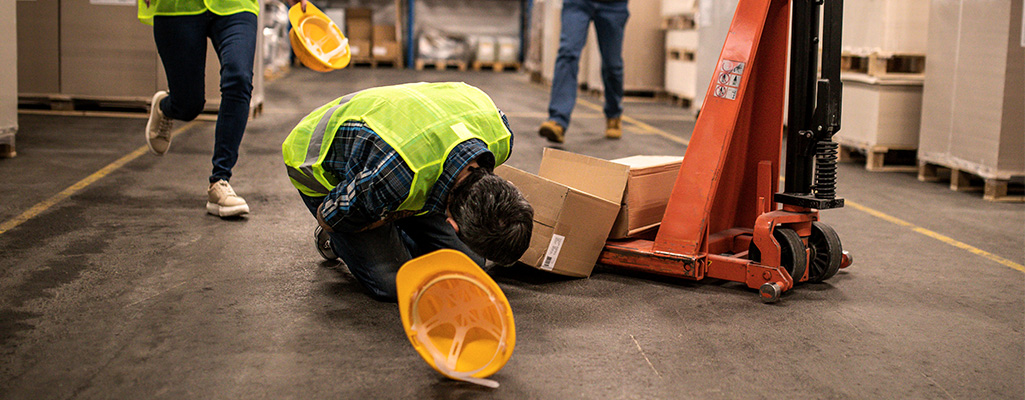
When a worker gets hurt on a manufacturing floor, a food processing line or a distribution warehouse, the immediate concern is the worker. But the decisions made in the next 60 minutes quietly determine how much that injury will cost your operation, and most employers do not see the full picture until the bill arrives.
The default path, send the worker offsite, let the ER or urgent care take it from there; feels like the safe, straightforward option. It is not. It is the most expensive one. And in industrial environments where injuries are not rare events, that cost compounds quickly.
Here is what actually happens when an injured worker leaves your jobsite, and what it costs at every step.
Step 1: The Worker Leaves. The Clock Starts.
The moment an employee leaves the worksite for offsite care, you lose control of the process. They are now in a general healthcare system that was not designed for occupational injuries. Urgent care centers and emergency rooms treat workplace injuries the same way they treat any other patient: as a new claim, without visibility into job demands, return-to-work protocols or your designated provider network.
Average wait times at urgent care facilities run 20 to 45 minutes before the worker even sees a provider. Emergency room waits can exceed two hours. For a shift-based industrial operation, that is not just medical time, it is production time. Depending on the role, the downstream disruption from one worker off the floor ripples across the shift.
Step 2: A Claim Opens — Often Unnecessarily
Here is what most employers do not realize: a significant portion of workplace injuries that end up in an ER or urgent care do not need to be there. Research consistently shows that 40 to 60 percent of occupational injury calls are resolvable with guided first aid or conservative care, no offsite visit required.
But once a worker walks into a general care facility, a claim typically opens. The treating provider documents the visit. The paperwork starts. And because that provider has no context for your return-to-work program, work restrictions are often broader than clinically necessary, keeping the worker out longer than the injury warrants.
The average workers’ compensation claim costs more than $40,000 when it involves medical treatment beyond first aid, according to the National Safety Council. Claims that involve lost time are higher still. Every unnecessary offsite visit is a potential claim you did not need to file.
Step 3: Documentation Gaps Create Compliance and Legal Risk
Offsite providers document for their purposes, not yours. OSHA recordkeeping requirements demand consistent, accurate incident documentation, and when care happens outside your system, that documentation is often incomplete, delayed or inconsistent with your internal records.
Gaps in documentation create audit exposure. Inconsistencies between the provider’s record and your incident report can complicate claim management and, in disputed cases, create litigation risk. For multi-site industrial operations running hundreds of incidents per year, the compounding effect of inconsistent documentation is a meaningful compliance liability.
Step 4: Return to Work Drags
The longer a worker is out of the building, the harder it is to get them back. That is not just intuition, it is a well-documented pattern in occupational health. Workers treated offsite, without communication back to a clinical team that knows their job demands, tend to carry broader restrictions longer than workers treated onsite with return-to-work protocols built into the care model.
Prolonged absence compounds the direct cost of the claim with indirect costs: overtime for coverage, reduced throughput, potential for re-injury on return, and the administrative burden of managing a modified duty program. The NSC estimates that indirect injury costs; productivity loss, supervisor time, administrative burden, routinely run two to four times the direct medical cost.
What the Same Injury Looks Like With Occupational Health Onsite
With an onsite clinic or 24/7 triage in place, that same injury follows a different path. The worker reports the incident. A clinician, or a triage nurse over the phone, assesses the injury immediately using evidence-based protocols. The majority of industrial injuries are resolved right there: guided first aid, wound care, evaluation, documentation. No offsite visit. No claim.
For injuries that do require further care, the clinician coordinates the referral directly, to your designated provider network, with the clinical context your case manager needs and a return-to-work plan built in from the start.
The numbers reflect the difference. Medcor resolves 88 percent of cases without an offsite visit. Across our client base, employers see an average 6:1 return on investment, for every dollar invested in occupational health, six come back through avoided claims, reduced severity and lower total cost of risk. At TEREX, 93.5 percent of workplace injuries were resolved onsite. A food processing client reduced employee healthcare costs dramatically in the first year of their Medcor program.
The Hidden Cost Is the Default Path
Industrial employers who send injured workers offsite by default are not taking the cautious approach. They are accepting the most expensive, least controlled version of injury management available, and paying for it in claims, lost productivity and compliance exposure they may not fully see.
The employers who have shifted that model, who have occupational health infrastructure where their people work, are not just reducing costs. They are building defensible programs, keeping workers on the floor and making better decisions with better data. If you are not sure what the current system is costing you, the answer may be clearer than you think. Calculate your workplace injury costs
That is what occupational health built for industrial workforces looks like. And it is what Medcor delivers, wherever your hard work happens.
See how Medcor’s onsite clinics and triage programs perform across manufacturing, logistics, food processing and construction: